



10 Ways to Use Abstract Art Prints in Your Home
Start with the Artwork, Then the Room
Abstract art can bring colour, shape, movement or a quieter visual pause to a room. There is no single way to use it well—the strongest choice depends on the artwork, the clear wall area, nearby furniture and how the room is used every day.
Use the ideas below as practical starting points rather than fixed decor rules. Begin with an artwork you genuinely enjoy, then build the placement, scale and frame around it.

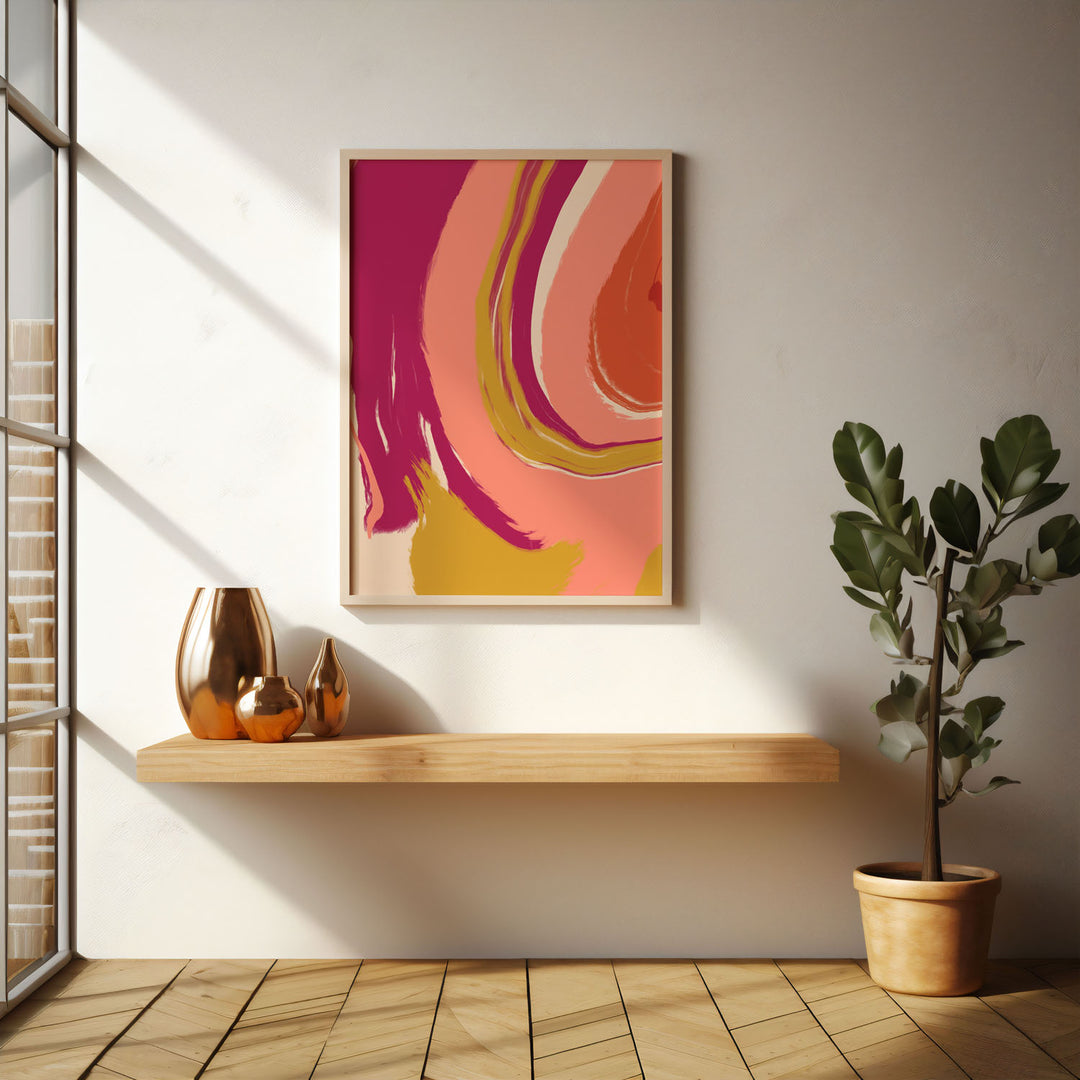
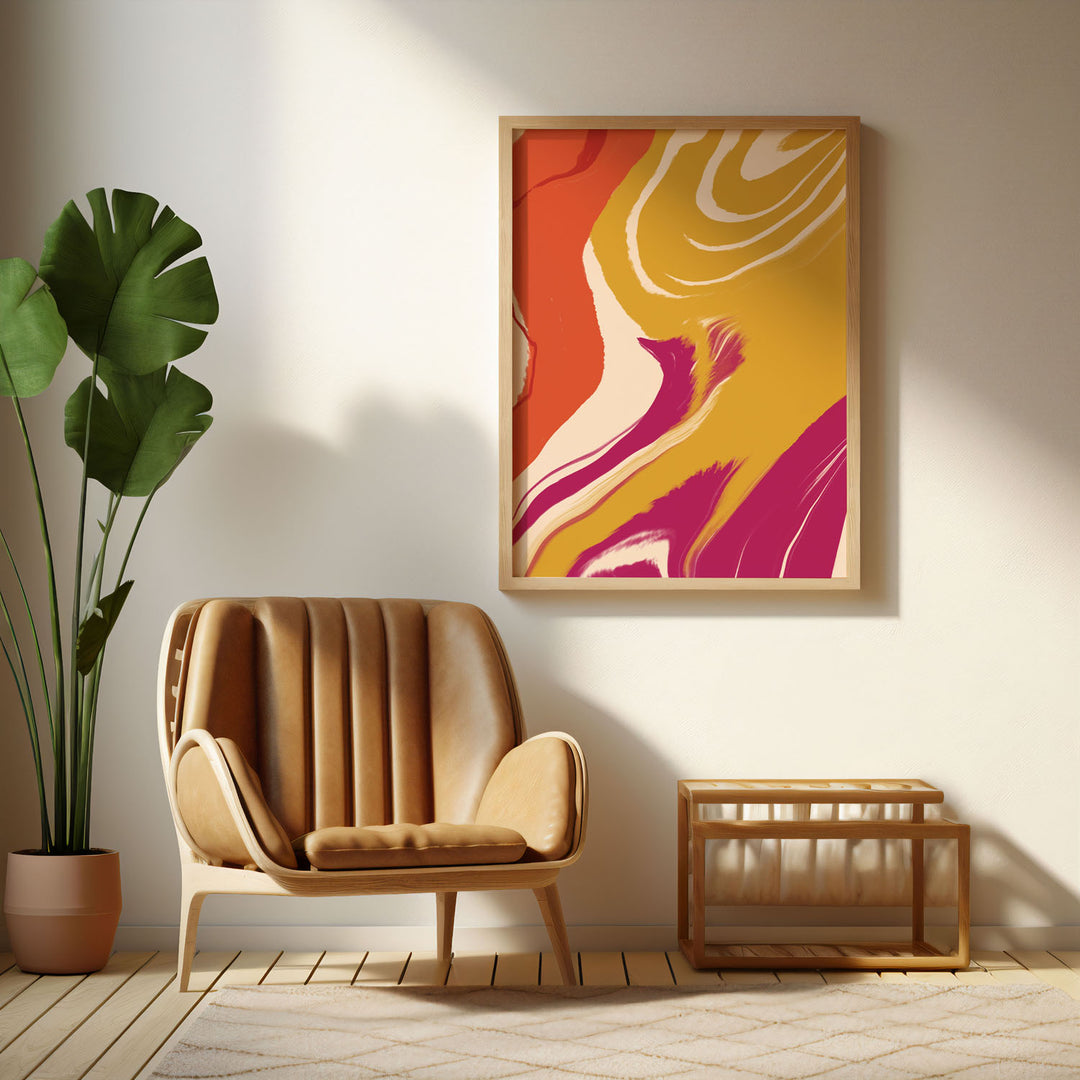
1. Create One Clear Focal Point
A larger abstract print can become the visual anchor of a living room, bedroom, dining area or entryway when the wall has enough open space around it.
- Start with furniture: Use the sofa, bed, console or dining surface below the artwork as a reference for overall proportion.
- Check the viewing point: Stand where the artwork will be seen most often before deciding on placement.
- Consider visual density: A highly detailed composition can feel powerful on a clear wall, while a simpler work may suit a room that already has pattern or texture.
Use paper templates before hanging so you can judge the overall composition in the room.
2. Build a Gallery Arrangement with a Plan
A gallery arrangement can bring several abstract works together without making the wall feel random. Start with one shared element: a related palette, consistent frame finish, matching spacing or a repeated scale.
- Choose an anchor: Start with the largest or most visually detailed artwork.
- Plan before hanging: Lay the arrangement on the floor or use paper templates on the wall.
- Keep spacing consistent: Equal gaps usually make a mixed group feel more deliberate.
- Use wall space carefully: Leave enough breathing room around the outer edges of the group.
Explore Gallery Sets or pair abstract works with Black & White Art for a more restrained display.
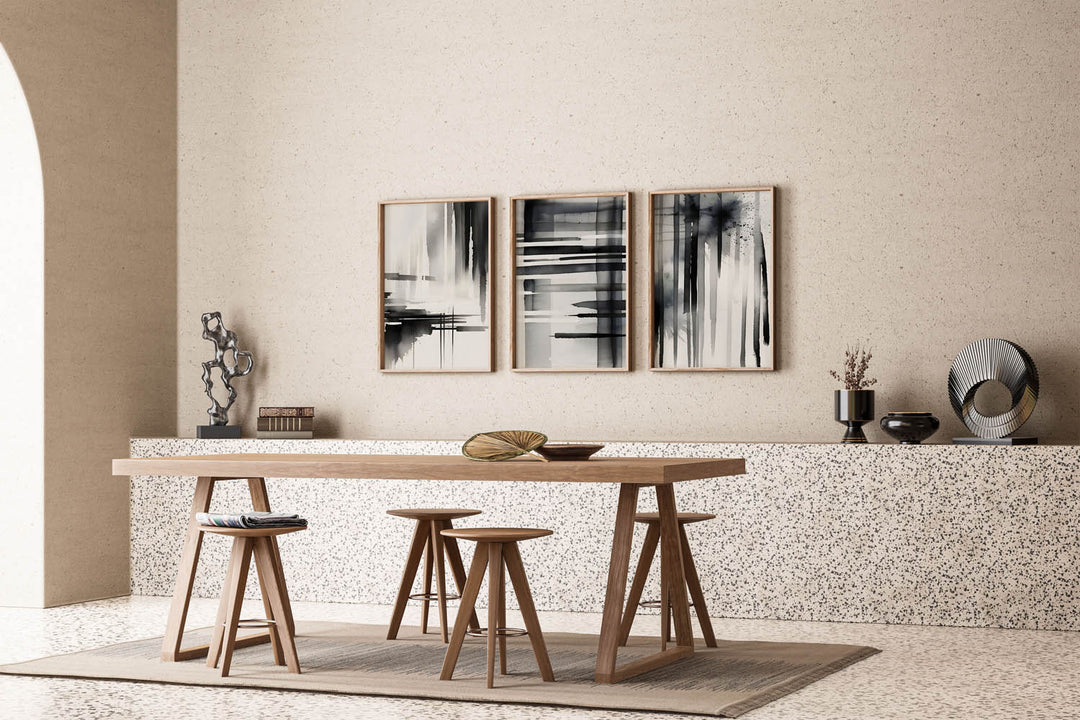
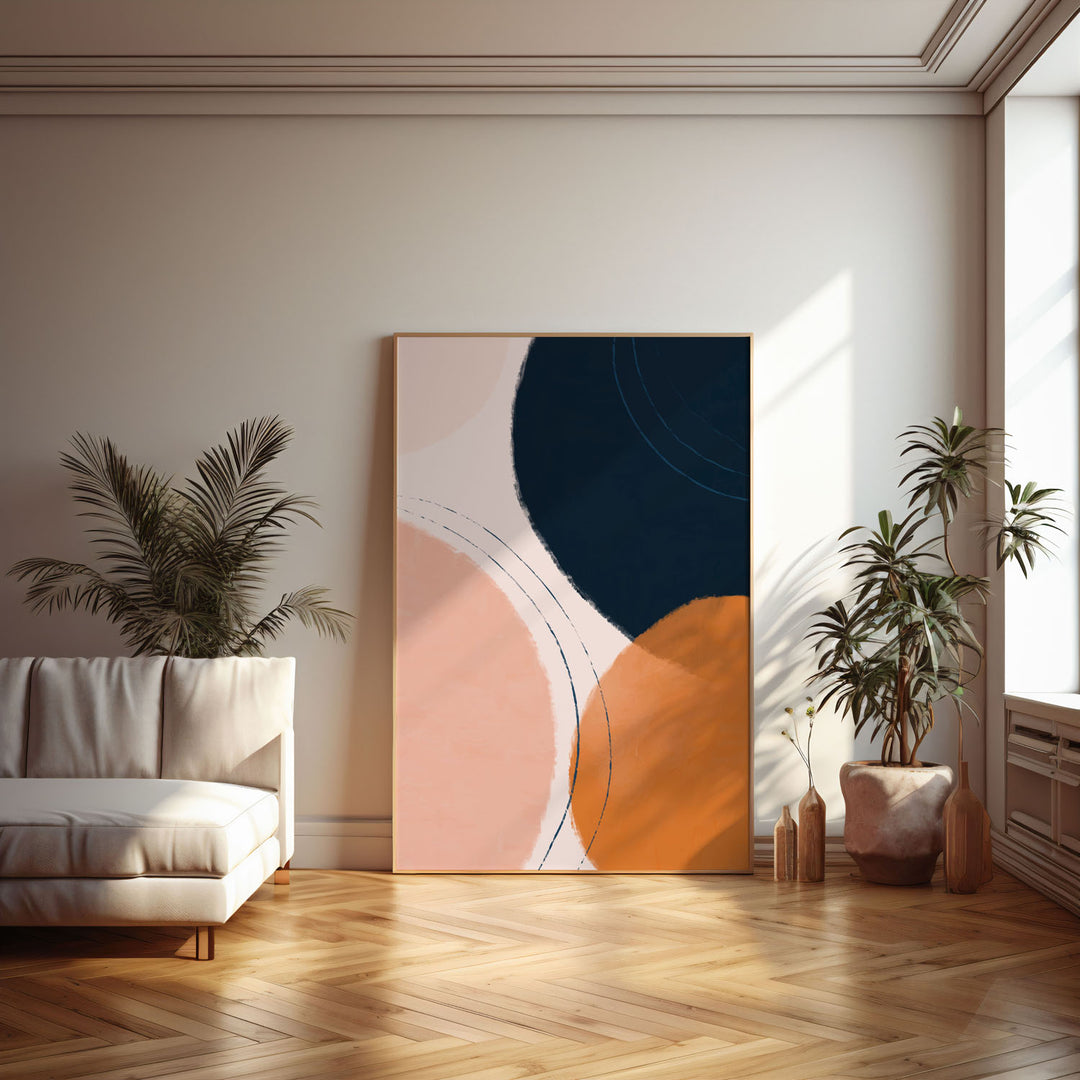
3. Let the Artwork Set a Colour Direction
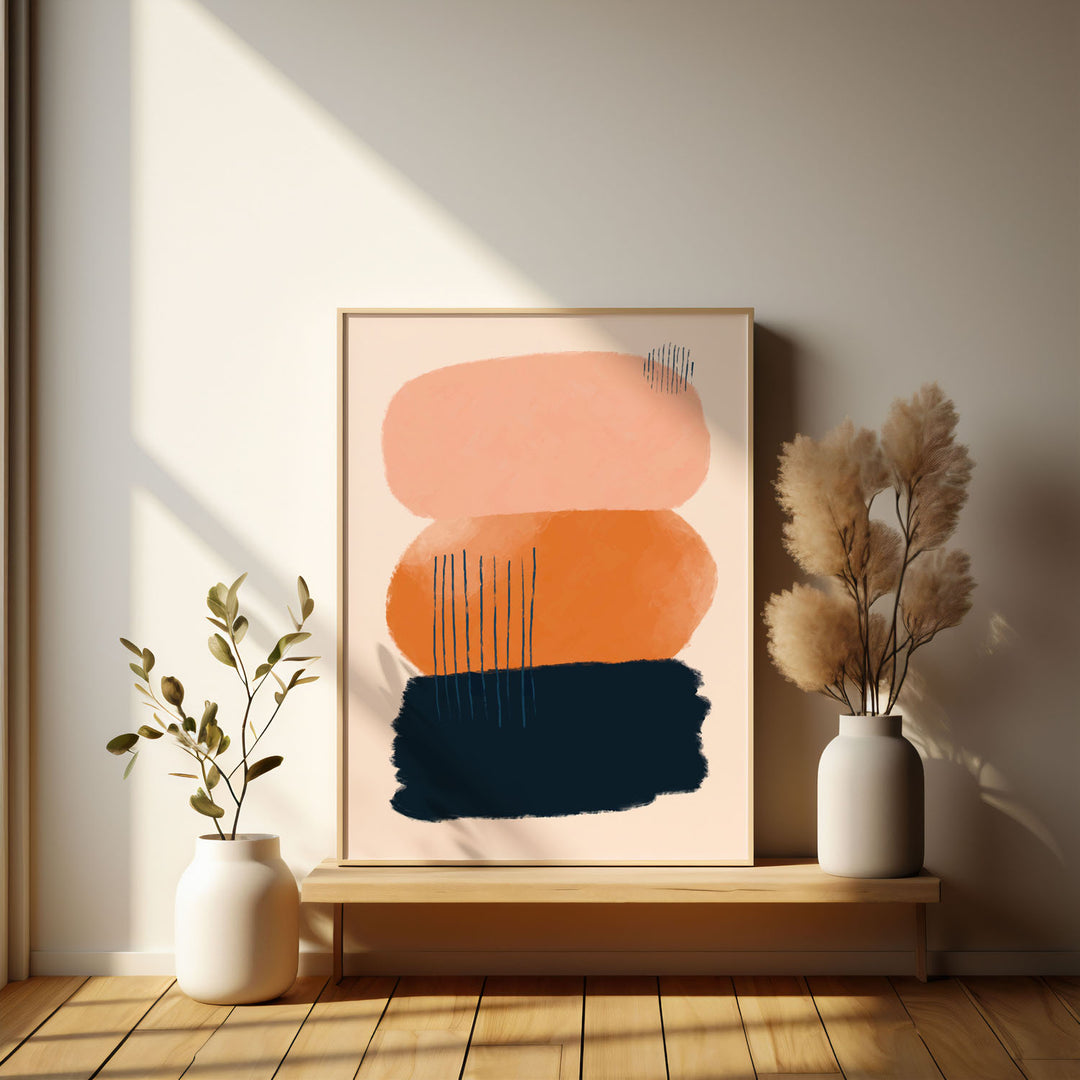
Abstract art can connect a room’s colours without requiring everything to match exactly. Look for one or two tones in the artwork that can relate to cushions, rugs, ceramics, upholstery or a nearby accent wall.
- For a connected room: Repeat one quieter tone from the artwork elsewhere in the space.
- For contrast: Choose an artwork that deliberately stands apart from the room’s dominant palette.
- For a calmer arrangement: Use a limited-palette abstract work against neutral walls and natural materials.
Choose the artwork first, then use colour relationships as a supporting layer rather than trying to force an exact match.


4. Pair Abstract Art with Traditional Pieces
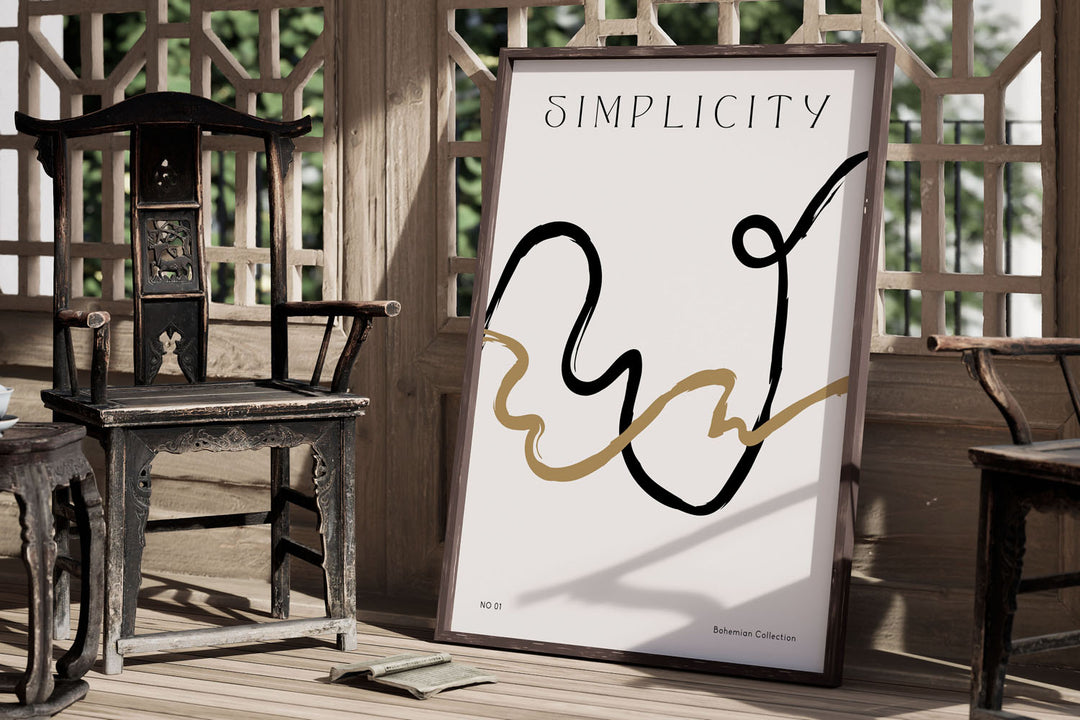
Abstract art can work well beside traditional furniture, Indian textiles, older timber pieces and more detailed interiors. The contrast often feels strongest when one element remains visually clear rather than every surface competing for attention.
- Use framing as a bridge: A wood-toned or darker frame can help connect a modern artwork with existing furniture.
- Choose one focal wall: Give the artwork enough clear space so it does not disappear into a dense arrangement of objects.
- Repeat one relationship: A shared colour, curved form or material can help the artwork feel connected to the room.
5. Use Art to Mark Different Zones
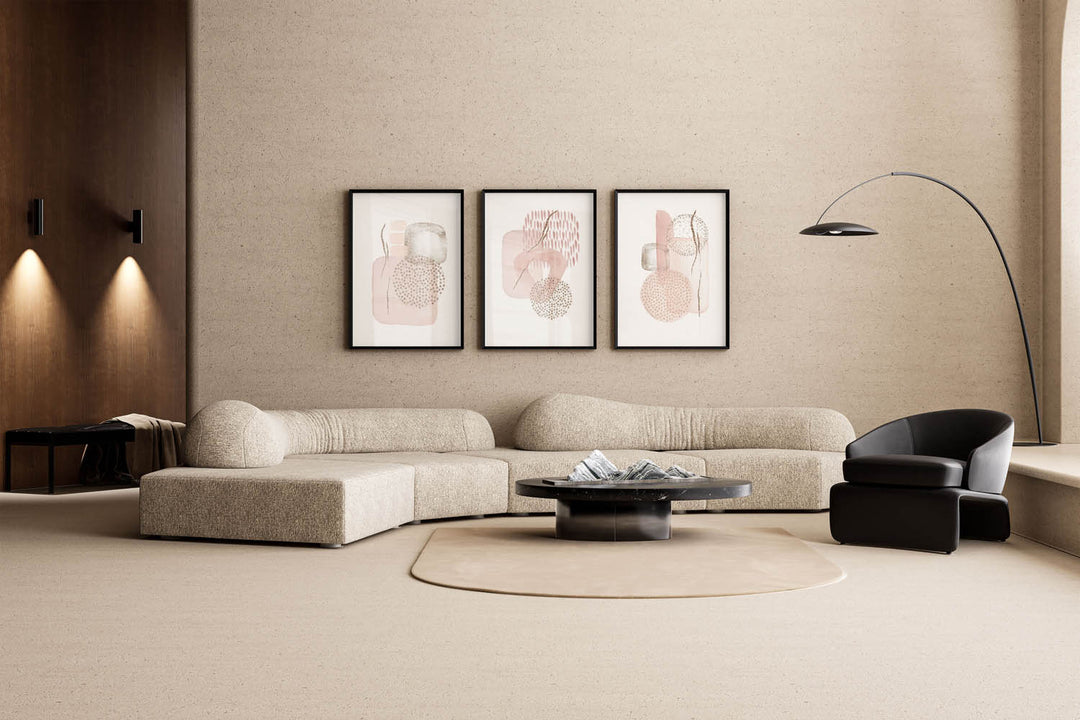
In an open-plan home, different artworks can help give a dining area, lounge, study corner or entryway its own identity without physically dividing the room.
- Use related works across zones: Repeat a palette, frame finish or visual style to keep the larger space connected.
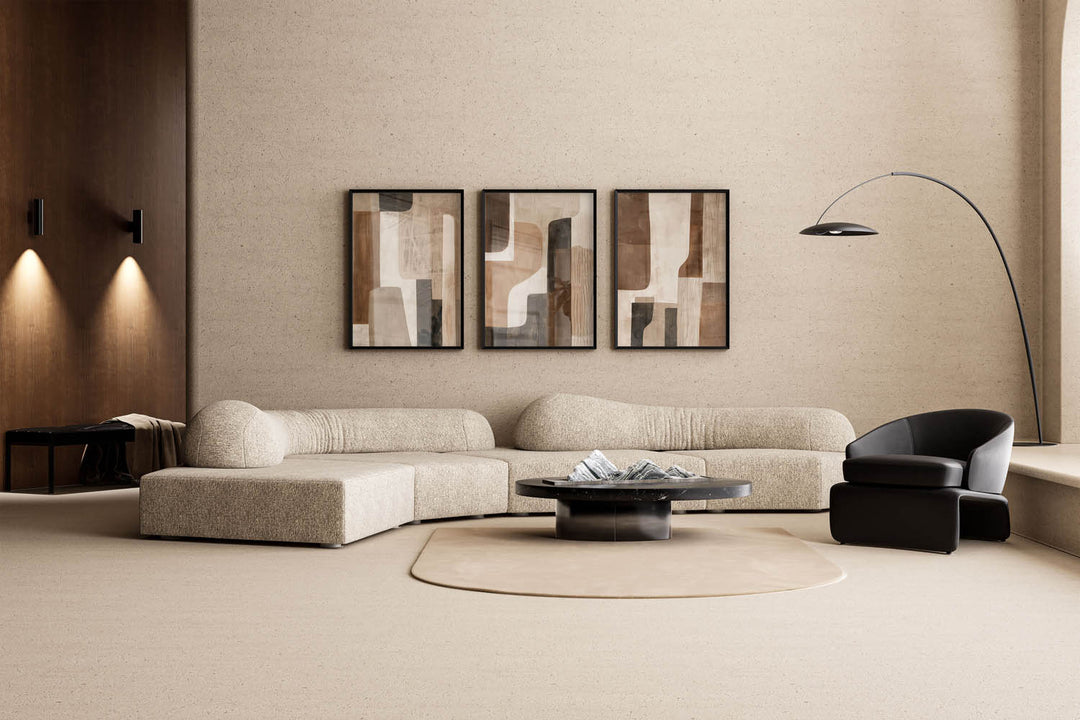
- Use a pair or series: Diptychs and triptychs can create continuity along a longer wall.
- Match scale to the zone: A compact study corner may need a quieter work than a broad dining or lounge wall.
6. Use Abstract Art in Transitional Spaces
Hallways, entryways, landings and the wall beside a staircase can be useful places for abstract art. These areas often benefit from a composition that reads clearly while passing through the space.
- Entryway: Choose one artwork that establishes the visual tone of the home.
- Hallway: Use a sequence of related prints when there is enough uninterrupted wall space.
- Staircase wall: Plan the arrangement from the main approach and check its balance from both directions.
- Reading or work corner: A smaller work can add visual character without taking over the room.
7. Build a Layered Display Carefully
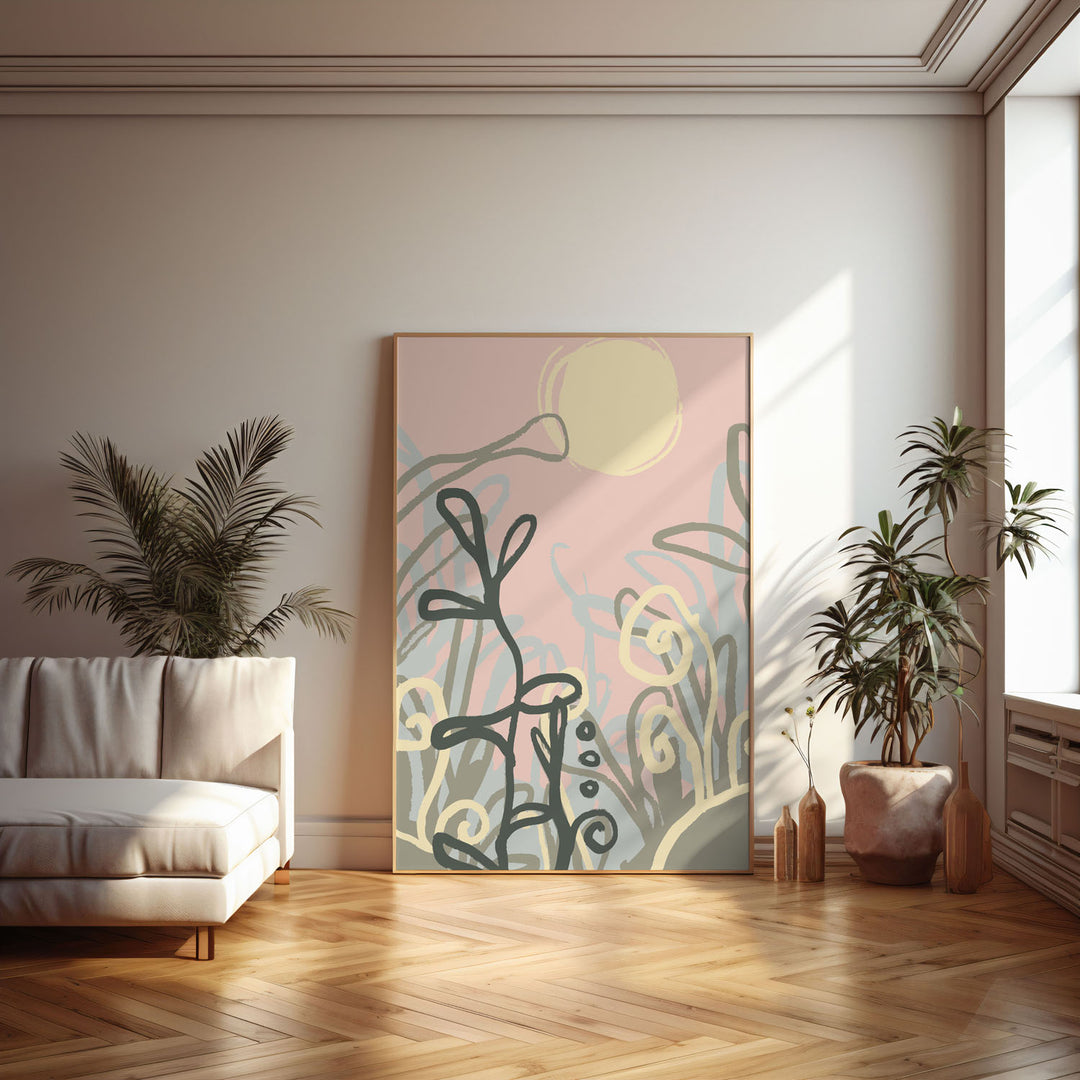
Layering can create a relaxed, collected look, especially on picture ledges, consoles or shelves. It works best when the display still has a clear structure.
- Start with one larger work: Use it as the base layer behind smaller pieces.
- Vary size, not everything: Keep a related palette, frame finish or subject direction so the group does not become cluttered.
- Use stable support: Ensure leaning or layered artwork is safely positioned and does not block everyday use of the surface.
8. Work with Architectural Lines
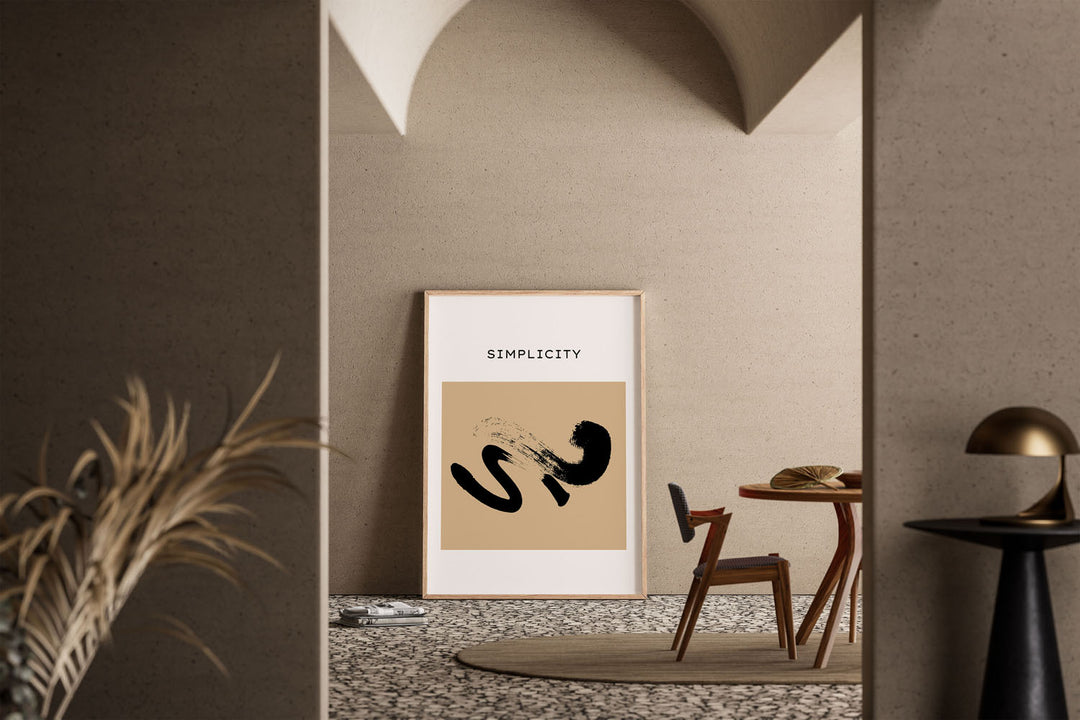
Abstract art can either echo or contrast with the architecture already present in a room. Use the wall’s proportions, openings and built-in elements as part of the placement decision.
- Tall walls: Vertical compositions can help use the height without making the wall feel empty.
- Wide walls: A landscape work, pair or planned series can create a more balanced horizontal read.
- Arches and niches: Curved or organic forms can relate naturally to softer architectural lines.
- Built-ins: Keep enough separation between artwork and shelves so both remain readable.
9. Refresh a Display When Your Space Changes
Artwork does not need to remain in the same room forever. Moving a print to a different wall, changing the surrounding furniture or building a new pair can give an existing piece a different role in the home.
- Reassess after furniture changes: A print that felt small above one sofa may become a strong focal point in another room.
- Try a new pairing: Combine two works through frame finish, palette or visual rhythm.
- Keep the wall plan simple: One intentional change often has more impact than adding several unrelated pieces.
10. Use Custom Size and Framing When the Wall Needs It
Some walls, artworks and projects need more than a standard format. Custom sizing, framing and matting can help create a more considered presentation for a specific room or a larger multi-artwork project.
- Custom dimensions: Useful when the available wall area does not suit standard size options.
- Framing and matting: Can help an artwork relate more closely to the materials and palette in the room.
- Multiple artworks: A shared framing approach can create consistency across a gallery wall or project space.
For a tailored requirement, visit Custom Art or contact RareMango with the artwork, wall size and framing details.

Honest answers to the questions you’d ask before you bought.
If something’s missing, our number’s at the bottom - we read every WhatsApp and reply within the day.
What type of abstract art works best in a living room?
Choose based on the available wall area, nearby furniture and the visual mood you want in the room. A larger focal artwork can work on a clear wall, while a quieter or smaller composition may suit a more layered space.
How do I choose colours for abstract wall art?
Look for one or two colours in the artwork that can relate to the room, or choose deliberate contrast against the wall and furnishings. Exact matching is not necessary for the arrangement to feel connected.
What size abstract art print should I choose?
Start with the clear wall area, furniture below the artwork and your main viewing position. Review the product-page dimensions, then test the approximate layout with paper templates before ordering.
Can I create a gallery wall using abstract art?
Yes. Use one shared element such as consistent frame finish, spacing, palette or artwork scale. Plan the full arrangement before hanging so the group reads as one considered composition.
Can abstract art work in a traditional Indian home?
Yes. Abstract art can work in modern, traditional and eclectic interiors. Use the frame, palette and placement to create a relationship with the room’s existing furniture, materials and visual detail.
Can I customise the size or framing?
Yes. RareMango offers custom size, framing and matting options for suitable requirements. Use the Custom Art pathway or contact the team with your artwork and wall details.
Explore Abstract Art for Your Home
Browse RareMango’s Abstract Art collection to compare visual directions for your walls. You can also explore Gallery Sets, Black & White Art and our guide to choosing the right frame.
